Novara Healthcare
Personalized Depression Treatment with MeRT
At Novara Healthcare, we offer a specialized approach to treating Depression through MeRT (Magnetic e-Resonance Therapy). This innovative therapy has shown great promise for individuals struggling with Major Depressive Disorder (MDD), including those with Treatment-Resistant Depression (TRD) who haven’t found success with medication alone.
Customized Care Built on Advanced Technology
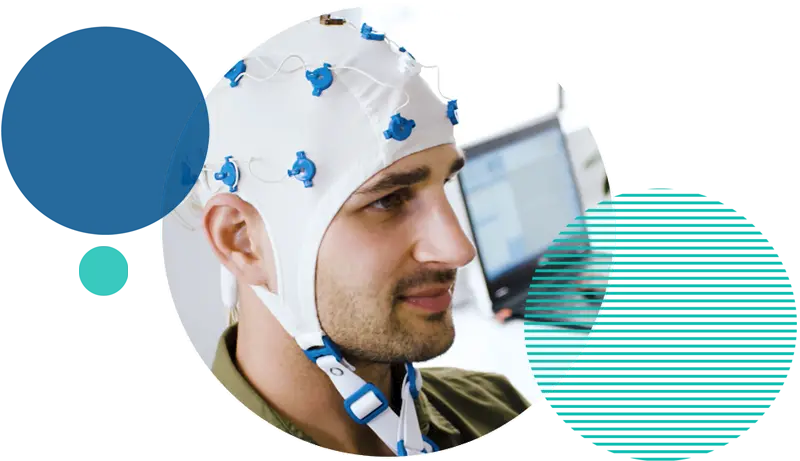
MeRT is an evolution of traditional Transcranial Magnetic Stimulation (TMS), but with a far more personalized approach. While standard TMS uses a one-size-fits-all method—typically stimulating one area of the brain with a single frequency—MeRT uses detailed brain mapping through a quantitative EEG (qEEG) and EKG to assess brainwave activity. This allows our team to precisely identify areas of dysfunction and tailor the treatment to match each patient’s unique brain pattern.

Understanding the Impact of Depression
Depression affects people in different ways. For some, it’s a constant weight, while for others, it comes and goes unpredictably. It can hide in the background for weeks or months before resurfacing. Even when it doesn’t feel overwhelming, it may still affect mood, energy levels, focus, and daily functioning.
MeRT offers a non-invasive, drug-free treatment option that has brought meaningful relief to many patients—especially when traditional treatments have failed or caused difficult side effects.

FDA-Cleared Technology, Covered by Many Insurances
If you’re covered under Tricare, ChampVA, Tricare For Life, your plan may offer benefits for MeRT treatment—either for yourself or a family member—depending on your individual policy and medical condition. Our New Patient Coordinator is happy to review your coverage details and walk you through what options may be available.
For all other insurance providers, we are considered an out-of-network provider. This means we are unable to submit insurance claims directly on your behalf. However, upon completion of your treatment, we will supply you with the necessary documentation to submit a claim to your insurance company for potential reimbursement.
It’s important to note that rTMS, the foundation of MeRT, is currently FDA-cleared for treating Major Depressive Disorder and Obsessive-Compulsive Disorder (OCD).
While some patients have been successful in obtaining partial reimbursement for services such as EEG testing or clinical evaluations, this varies based on the specific terms of each insurance plan. At this time, patients with Medicare have generally reported that MeRT is not reimbursed under their coverage.
How MeRT Works
What sets MeRT apart is the level of customization. Before starting treatment, we conduct a comprehensive qEEG—a type of brain scan that helps us detect where communication in the brain is disrupted. From there, our specialists create a targeted treatment plan that adjusts the stimulation’s location, frequency, and intensity based on your brain’s specific needs.
The process starts with qEEG brain imaging, which gives us an in-depth picture of your brain’s electrical activity and highlights areas of imbalance. Using these insights, we develop a personalized treatment protocol aimed at restoring proper neural connectivity and improving communication within the brain.
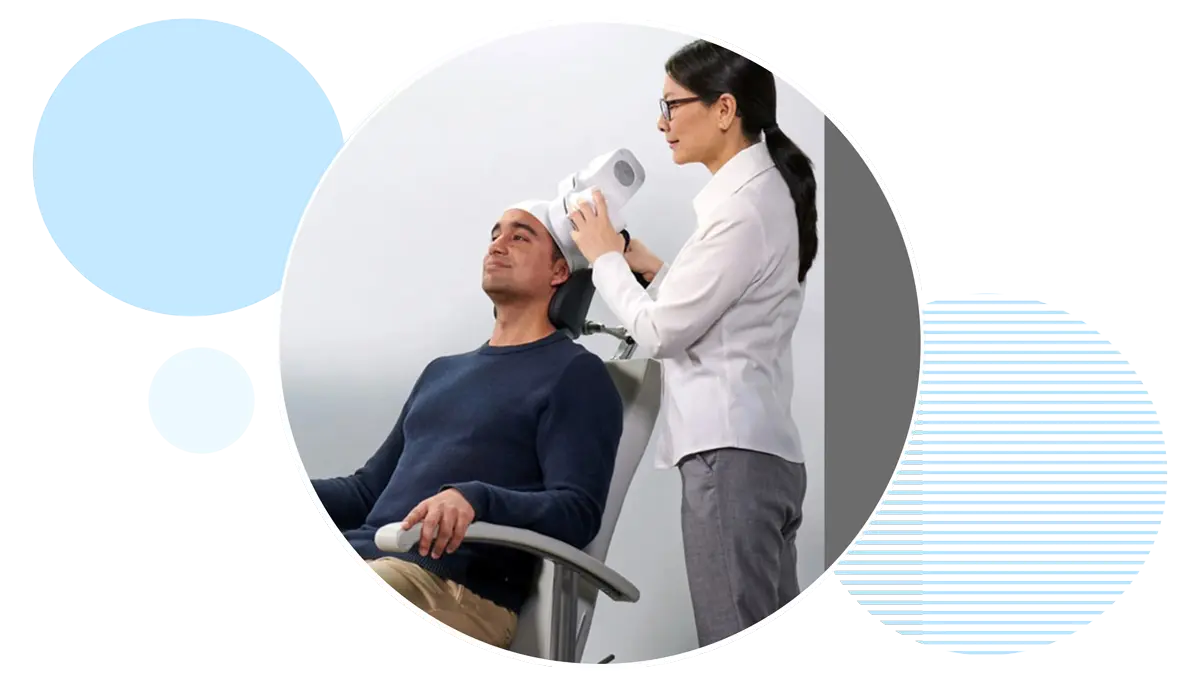
The therapy itself involves using a magnetic coil to deliver gentle pulses to targeted brain regions. Each session lasts about 30 minutes and is scheduled five days a week, typically over a 4 to 8-week period. Many patients notice early improvements within the first week of treatment.
Best of all, the benefits of MeRT often continue well beyond the treatment window, with many individuals reporting lasting improvements and no need for further sessions.
Discover the MeRT Difference
If you’re seeking an effective, non-invasive solution for Depression—especially if medications haven’t helped—MeRT at Novara Healthcare may be the answer. Our expert team is here to guide you through every step of the process, from initial assessment to treatment and beyond.
To learn more about how MeRT works and what to expect,
visit our dedicated MeRT page.
The Scientific Foundation of MeRT: Supported by Extensive Independent Research
The groundbreaking Science behind MeRT is backed by decades of Published Research, some of which you can see here:
TMS Should Be Considered as First-Line Treatment For Moderate to Severe Major Depressive Disorder, in Psychiatric News, October 2022.
The article’s author, Richard A. Bermudes, reviewed a decade’s worth of studies on the effectiveness of TMS and wrote this:
“As I read the [APA] guidelines recently and considered the number of new outcome studies conducted with TMS, I believe TMS should be considered, in addition to pharmacotherapy and psychotherapy, as a first-line treatment for patients with moderate to severe major depressive disorder.”
A retrospective chart review to assess the impact of alpha-guided transcranial magnetic stimulation on symptoms of PTSD and depression in active-duty special operations service members, 21 June 2024.
“This data provides a demonstration of significant reduction in PTSD and depression symptoms and safety with the application of a-rTMS in active-duty special operations military personnel. Expansion of targeted neuromodulation programs could be impactful for military and civilian populations.”
Efficacy of repetitive transcranial magnetic stimulation (rTMS) adjunctive therapy for major depressive disorder (MDD) after two antidepressant treatment failures, July 2023.
Transcranial magnetic stimulation (TMS) for major depression: a multisite, naturalistic, observational study of quality of life outcome measures in clinical practice, July 2013.
This study found: “Conclusion: These data confirm that TMS is effective in the acute treatment of MDD in routine clinical practice settings. This symptom benefit is accompanied by statistically and clinically meaningful improvements in patient-reported QOL [quality of life] and functional status outcomes.”
Transcranial magnetic stimulation (TMS) for major depression: a multisite, naturalistic, observational study of acute treatment outcomes in clinical practice, Carpenter et al, 2012.
“These data indicate that TMS is an effective treatment for those unable to benefit from initial antidepressant medication.”
Repetitive Transcranial Magnetic Stimulation for the Treatment of Resistant Depression: A Scoping Review. June 2022.
“Overall, 16 out of the 17 studies suggested that rTMS treatment was effective, safe and tolerated in TRD. For patients with TRD, rTMS appears to provide significant benefits through the reduction of depressive symptoms…”
The association between sample and treatment characteristics and the efficacy of repetitive transcranial magnetic stimulation in depression. Oct 2022.
“Data from nearly 3000 patients from 65 randomized controlled trials were included in this meta-analysis. rTMS was confirmed as efficacious in treating depression when looking at symptom reduction, response and remission.”
Efficacy of repetitive transcranial magnetic stimulation in treatment-resistant depression: the evidence thus far, August 2019.
“rTMS is rapidly gaining popularity as a treatment modality for depression. There is growing evidence to support its use in patients with depression as a monotherapy or as adjunct with pharmacotherapy. Additionally, rTMS has been found to be safe and effective in pregnant patients and elderly patients…”
Use of Transcranial Magnetic Stimulation for Depression, May 2019.
“The clinical efficacy of TMS as an antidepressant has been well established. TMS is an innovative and promising treatment modality for patients with TRD [treatment-resistent depression].”
Experimental depression treatment is nearly 80% effective in controlled study, October 28, 2021.
“In a double-blind controlled study, high doses of magnetic brain stimulation, given on an accelerated timeline and individually targeted, caused remission in 79% of trial participants with severe depression.”
“A new type of magnetic brain stimulation brought rapid remission to almost 80% of participants with severe depression in a study conducted at the Stanford University School of Medicine.”
Healthcare Services
The Scientific Foundation of MeRT: Supported by Extensive Independent Research
The groundbreaking Science behind MeRT is backed by decades of Published Research, some of which you can see here:

TMS Should Be Considered as First-Line Treatment For Moderate to Severe Major Depressive Disorder, in Psychiatric News, October 2022.
The article’s author, Richard A. Bermudes, reviewed a decade’s worth of studies on the effectiveness of TMS and wrote this:
“As I read the [APA] guidelines recently and considered the number of new outcome studies conducted with TMS, I believe TMS should be considered, in addition to pharmacotherapy and psychotherapy, as a first-line treatment for patients with moderate to severe major depressive disorder.”
A retrospective chart review to assess the impact of alpha-guided transcranial magnetic stimulation on symptoms of PTSD and depression in active-duty special operations service members, 21 June 2024.
“This data provides a demonstration of significant reduction in PTSD and depression symptoms and safety with the application of a-rTMS in active-duty special operations military personnel. Expansion of targeted neuromodulation programs could be impactful for military and civilian populations.”
Efficacy of repetitive transcranial magnetic stimulation (rTMS) adjunctive therapy for major depressive disorder (MDD) after two antidepressant treatment failures, July 2023.
“Several meta-analyses proved the efficacy of rTMS treatment in MDD, which is comparable to pharmacotherapy, and may have even better tolerability. Our results strengthened that rTMS is associated with clinically relevant antidepressant effect in TRD as well, and may be a beneficial tool in the add-on treatment of patients with TRD. Furthermore, rTMS adjunctive treatment to antidepressants was found to be specifically effective in achieving full remission.”
Transcranial magnetic stimulation (TMS) for major depression: a multisite, naturalistic, observational study of quality of life outcome measures in clinical practice, July 2013.
This study found: “Conclusion: These data confirm that TMS is effective in the acute treatment of MDD in routine clinical practice settings. This symptom benefit is accompanied by statistically and clinically meaningful improvements in patient-reported QOL [quality of life] and functional status outcomes.”
Transcranial magnetic stimulation (TMS) for major depression: a multisite, naturalistic, observational study of acute treatment outcomes in clinical practice, Carpenter et al, 2012.
“These data indicate that TMS is an effective treatment for those unable to benefit from initial antidepressant medication.”
Repetitive Transcranial Magnetic Stimulation for the Treatment of Resistant Depression: A Scoping Review. June 2022.
“Overall, 16 out of the 17 studies suggested that rTMS treatment was effective, safe and tolerated in TRD. For patients with TRD, rTMS appears to provide significant benefits through the reduction of depressive symptoms…”
The association between sample and treatment characteristics and the efficacy of repetitive transcranial magnetic stimulation in depression. Oct 2022.
“Data from nearly 3000 patients from 65 randomized controlled trials were included in this meta-analysis. rTMS was confirmed as efficacious in treating depression when looking at symptom reduction, response and remission.”
Efficacy of repetitive transcranial magnetic stimulation in treatment-resistant depression: the evidence thus far, August 2019.
“rTMS is rapidly gaining popularity as a treatment modality for depression. There is growing evidence to support its use in patients with depression as a monotherapy or as adjunct with pharmacotherapy. Additionally, rTMS has been found to be safe and effective in pregnant patients and elderly patients…”
Use of Transcranial Magnetic Stimulation for Depression, May 2019.
“The clinical efficacy of TMS as an antidepressant has been well established. TMS is an innovative and promising treatment modality for patients with TRD [treatment-resistent depression].”
Experimental depression treatment is nearly 80% effective in controlled study, October 28, 2021.
“In a double-blind controlled study, high doses of magnetic brain stimulation, given on an accelerated timeline and individually targeted, caused remission in 79% of trial participants with severe depression.”
“A new type of magnetic brain stimulation brought rapid remission to almost 80% of participants with severe depression in a study conducted at the Stanford University School of Medicine.”
Hear it from the Patients
Hear what some of our Patients have experienced with MeRT
Watch the Episode
Sean Bartlett – Brain Treatment Center San Diego (Full Interview)
- If you or someone you know is in crisis, call or text 988 to reach the Suicide & Crisis Lifeline, available 24/7
Schedule for Depression Treatment
Novara Healthcare offers advanced therapies like TMS in a compassionate, patient-first setting. With personalized care plans, cutting-edge technology, and a dedicated team, our clinic delivers exceptional care to address the unique needs of each individual. If you’re seeking depression treatment, don’t wait—schedule your consultation today and take the first step toward a brighter, healthier future.