
MeRT, A Non-Invasive, Drug-Free Treatment for PTSD ,Post-Traumatic Stress Disorder, Has Seen Some Incredible Results
Understanding PTSD Through Brainwave Patterns
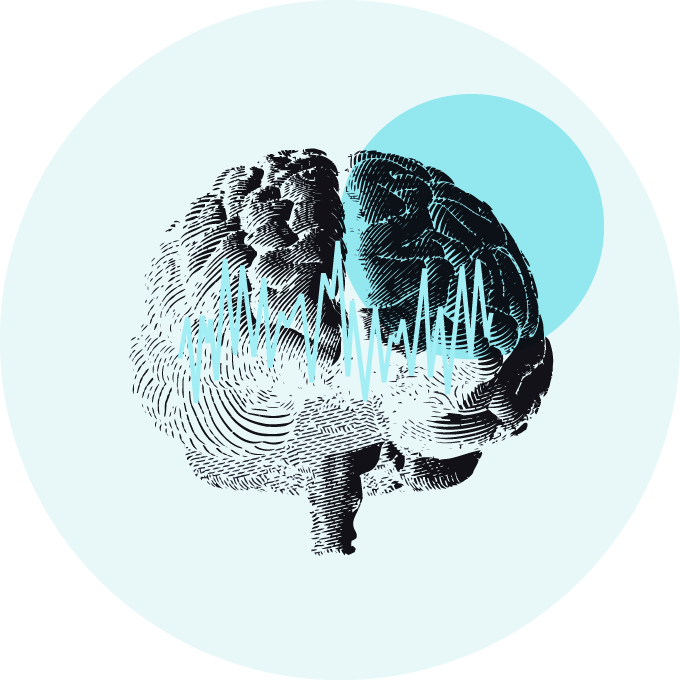
Many patients with PTSD show abnormalities in the frontal region of the brain. EEG scans frequently reveal two conflicting alpha wave frequencies in this area, along with excessive delta and theta activity—low-frequency waves that typically dominate during sleep or deep relaxation. These irregularities disrupt the brain’s normal rhythm, which should ideally show a dominant, consistent alpha pattern. Our approach focuses on detecting these imbalances and promoting healthier brainwave patterns to help alleviate PTSD symptoms.
Tailored Brain Therapy: MeRT®
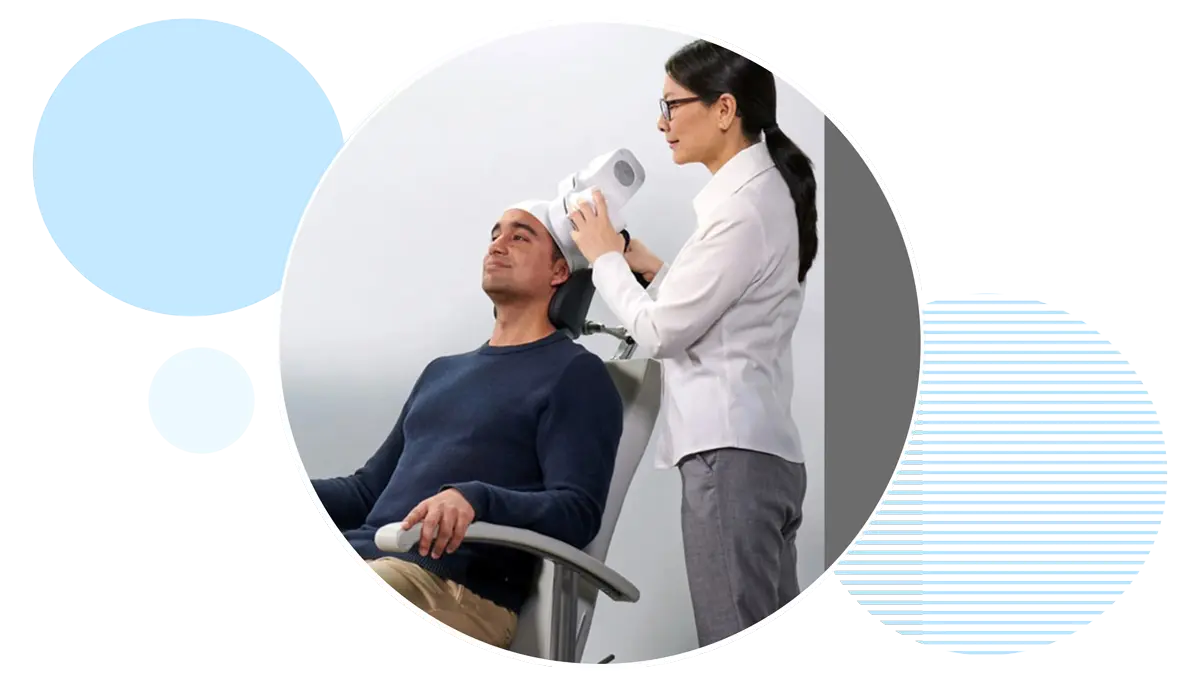
We use a highly personalized approach called MeRT® (Magnetic e-Resonance Therapy) to support each individual’s neurological recovery. This technique involves using magnetic stimulation to recalibrate the brain’s electrical activity. The therapy plan is crafted based on an in-depth analysis of each patient’s EEG and EKG data, allowing for precise adjustments in stimulation frequency, intensity, and target location.
The process begins with a quantitative EEG to capture a detailed map of the patient’s brainwave activity. Our scientific team analyzes the data to create a treatment plan that addresses the patient’s unique neurological profile. You’ll then meet with a clinician who will walk you through your personalized protocol and what to expect from the therapy.
Because no two brains are the same, every treatment plan is uniquely tailored. This individualized method often results in substantial improvements in symptoms and overall mental health.
The equipment used for MeRT is FDA-cleared, and the rTMS technology it relies on is FDA-cleared for treating conditions like Major Depressive Disorder and Obsessive-Compulsive Disorder. While MeRT is considered an off-label application for PTSD, many patients experience positive outcomes in managing trauma-related symptoms.
At Novara Healthcare, our Houston Clinic, we are dedicated to helping patients and families address these challenges through innovative, compassionate care designed to unlock each individual’s potential.


What is PTSD?
Post-Traumatic Stress Disorder (PTSD) is a mental health condition that can develop after someone experiences or witnesses a traumatic event or extended period of extreme stress or abuse. This could include anything from combat exposure and serious accidents to physical or mental assault or natural disasters. PTSD doesn’t just affect emotions—it impacts how the brain processes and responds to stress, often keeping the person stuck in a state of heightened alertness or emotional distress long after the danger has passed.
Some of the symptoms can include difficulty sleeping, nightmares, a negative outlook, anxiety or panic attacks, depression, inability to deal with stress, feeling numb, easily startled, and extreme emotional responses.
People with PTSD may relive the traumatic event through flashbacks, nightmares, or intrusive thoughts. They might also avoid people, places, or situations that remind them of what happened. It’s common for individuals to feel emotionally numb, anxious, irritable, or disconnected from others.
What makes PTSD different from a typical stress response is how long these symptoms last and how deeply they interfere with daily life. Instead of fading over time, the stress response becomes ingrained, leading to ongoing mental and physical challenges. Fortunately, with the right treatment and support, many people with PTSD can find relief and begin to heal.
What is MeRT?
MeRT (Magnetic e-Resonance Therapy) is a next-generation advancement in brain modulation—offering a far more individualized approach than traditional Transcranial Magnetic Stimulation (TMS). While both therapies use magnetic pulses to influence brain activity, MeRT is distinctly customized. Every aspect of the treatment—frequency, location, and intensity—is tailored to the individual’s unique brainwave patterns.
TMS devices, which are FDA-cleared for conditions like Major Depressive Disorder and OCD, are also used off-label to help with a variety of neurological challenges, including Autism Spectrum Disorder. MeRT builds on this foundation, enhancing its effectiveness through advanced diagnostic tools.
By integrating Transcranial Magnetic Stimulation with Quantitative EEG (qEEG), MeRT allows clinicians to assess each patient’s brainwave activity in extraordinary detail. This data guides the creation of a completely customized treatment plan, unlike standard TMS, which delivers a uniform protocol regardless of the patient.
Where traditional TMS might stimulate a fixed brain region at a preset frequency, MeRT identifies exactly which areas need support and how best to stimulate them. Through in-depth brain mapping and functional analysis, we determine optimal neural synchronization and then use that insight to restore better brain communication.
For individuals with autism, treatment typically spans six to eight weeks, with brief sessions (30–45 minutes) held Monday through Friday. Many begin noticing changes within the first few weeks—such as enhanced communication, improved focus, and increased social engagement.*
Years of Research Support MeRT’s Role in PTSD Treatment
MeRT incorporates targeted repetitive Transcranial Magnetic Stimulation (rTMS)—a technique that has been the focus of numerous clinical studies for its effectiveness in addressing symptoms of Post-Traumatic Stress Disorder (PTSD). With a growing body of research conducted over many years, the evidence continues to build in support of rTMS as a valuable component of PTSD recovery. Below are just a few of the studies highlighting its positive impact.
A retrospective chart review to assess the impact of alpha- guided transcranial magnetic stimulation on symptoms of PTSD and depression in active-duty special operations service members, 21 June 2024. “This data provides a demonstration of significant reduction in PTSD and depression symptoms and safety with the application of a-rTMS in active-duty special operations military personnel. Expansion of targeted neuromodulation programs could be impactful for military and civilian populations.”
How Electric Therapy Is Curing Navy SEALs of PTSD, Jan 2019. “Hundreds of vets have tried out an experimental new treatment that could change how the world addresses mental disorders.” And, “All said that they saw big improvements after a course of therapy that ran five days a week for about four weeks.”
Synchronized transcranial magnetic stimulation for post-traumatic stress disorder and comorbid major depression: “All participants demonstrated significant reductions in PTSD and MDD symptoms (all p < .001). As expected, there were significant reductions in symptoms in both treatment groups, but active stimulation did provide greater reductions in count of PTSD moderate-to-severe symptoms.”
Magnetic E-Resonant Therapy Alleviates Combat Related Post-traumatic Stress Disorder, in Aerospace Medical Association, March 2017. “Our preliminary results suggest that transcranial MeRT may provide an alternate method to help veterans suffering from PTSD.”
Individualized Electromagnetic Treatment in Post-traumatic Stress Disorder: a Randomized, Double-blind, Sham-controlled Trial, Poster Accepted, Taghva, et al. “This double-blind, randomized, controlled trial shows that transcranial magnetic therapy based on individualized frequencies derived from EEG/EKG is an effective therapy for PTSD in improving overall symptoms and quality of sleep.”
EEG_EKG Guided TMS in veterans with PTSD_Randomized double-blinded pilot study. “Following 2 weeks of EEG-EKG guided transmagnetic stimulation, significant changes in symptom severity and EEG measures are reported for 80 retired military veterans with post-traumatic stress disorder. Patients had greatest comparative reductions in PCL-M subscales VII “avoid situation indicator” XII “short future indicator” and XIII “trouble falling or staying asleep indicator”. The improvement in sleep was confirmed for treated vs sham group in PSQI-A, and, may suggest correlation between sleep disorder and PTSD symptoms. Of the 37 patients who had suicidal ideation by HAM-D, 29 patients denied ideation by 4 weeks. No patient worsened in clinical PTSD symptoms after receiving therapy. “
Low-frequency, Repetitive Transcranial Magnetic Stimulation for the Treatment of Patients with Post-traumatic Stress Disorder: a Double-blind, Sham-controlled Study, Nam et al, 2013. “The present study showed low-frequency rTMS to be an effective and tolerable option for the treatment of PTSD. Trials using variable indices of rTMS to the right prefrontal cortex and explorations of the differences in the effects on specific symptom clusters may be promising avenues of research regarding the use of rTMS for PTSD.

A retrospective chart review to assess the impact of alpha- guided transcranial magnetic stimulation on symptoms of PTSD and depression in active-duty special operations service members, 21 June 2024.
“This data provides a demonstration of significant reduction in PTSD and depression symptoms and safety with the application of a-rTMS in active-duty special operations military personnel. Expansion of targeted neuromodulation programs could be impactful for military and civilian populations.”
How Electric Therapy Is Curing Navy SEALs of PTSD, Jan 2019.
“Hundreds of vets have tried out an experimental new treatment that could change how the world addresses mental disorders.” And, “All said that they saw big improvements after a course of therapy that ran five days a week for about four weeks.”
Synchronized transcranial magnetic stimulation for post-traumatic stress disorder and comorbid major depression:
“All participants demonstrated significant reductions in PTSD and MDD symptoms (all p < .001). As expected, there were significant reductions in symptoms in both treatment groups, but active stimulation did provide greater reductions in count of PTSD moderate-to-severe symptoms.”
Magnetic E-Resonant Therapy Alleviates Combat Related Post-traumatic Stress Disorder, in Aerospace Medical Association, March 2017.
“Our preliminary results suggest that transcranial MeRT may provide an alternate method to help veterans suffering from PTSD.”
Individualized Electromagnetic Treatment in Post-traumatic Stress Disorder: a Randomized, Double-blind, Sham-controlled Trial, Poster Accepted, Taghva, et al.
“This double-blind, randomized, controlled trial shows that transcranial magnetic therapy based on individualized frequencies derived from EEG/EKG is an effective therapy for PTSD in improving overall symptoms and quality of sleep.”
EEG_EKG Guided TMS in veterans with PTSD_Randomized double-blinded pilot study.
“Following 2 weeks of EEG-EKG guided transmagnetic stimulation, significant changes in symptom severity and EEG measures are reported for 80 retired military veterans with post-traumatic stress disorder. Patients had greatest comparative reductions in PCL-M subscales VII “avoid situation indicator” XII “short future indicator” and XIII “trouble falling or staying asleep indicator”. The improvement in sleep was confirmed for treated vs sham group in PSQI-A, and, may suggest correlation between sleep disorder and PTSD symptoms. Of the 37 patients who had suicidal ideation by HAM-D, 29 patients denied ideation by 4 weeks. No patient worsened in clinical PTSD symptoms after receiving therapy. “
Low-frequency, Repetitive Transcranial Magnetic Stimulation for the Treatment of Patients with Post-traumatic Stress Disorder: a Double-blind, Sham-controlled Study, Nam et al, 2013.
“The present study showed low-frequency rTMS to be an effective and tolerable option for the treatment of PTSD. Trials using variable indices of rTMS to the right prefrontal cortex and explorations of the differences in the effects on specific symptom clusters may be promising avenues of research regarding the use of rTMS for PTSD.
A New Path Forward for Individuals with PTSD
“It was absolutely terrifying to not know what was wrong with me or how to fix the problem. MeRT not only identified the deteriorated state of my brainwave activity, they restored its function… I consider the healing I experienced to be nothing short of a miracle.” – Scot Spooner, US Army Veteran

What to Expect
At Novara Healthcare’s Houston Clinic, Magnetic eResonance Therapy (MeRT) offers a personalized approach to PTSD Treatment. Many patients experience improvements in a wide range of symptoms and overall quality of life.
Take the First Step—No Pressure, Just Possibility. You don’t need to make any decisions right away. If you’re curious about whether MeRT could help with PTSD, consider starting with an initial evaluation.
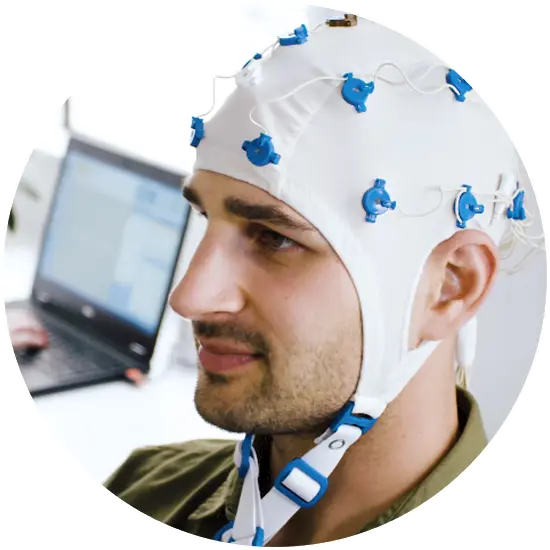
The first step involves a detailed assessment, including a qEEG and EKG, performed by our trained Neuro-technician. We’ll also ask you to complete a brief questionnaire about your symptoms and medical history. This appointment typically takes 45 minutes to an hour and helps us identify any disruptions in brain activity or communication patterns.
At your follow-up visit, which also lasts about 45 minutes, you’ll meet with a provider for a full clinical review. We’ll go over your test results, answer your questions, and walk you through a potential treatment plan tailored to your unique brain function.
This two-step process gives you a clear picture of how MeRT could benefit you—without any obligation to move forward until you’re ready.
Here it from Veterans who received PTSD Treatment with MeRT
Tricare Coverage
Benefits for MeRT Treatment

Hear it from the Patients
More MeRT Reviews for PTSD
Watch the Episode
MeRT Highlighted on The Broken Brain Podcast
The Broken Brain Podcast, known for diving deep into the science of mental and physical health, recently spotlighted MeRT (Magnetic e-Resonance Therapy) as an innovative approach to treating neurological conditions—especially PTSD.
- If you or someone you know is in crisis, call or text 988 to reach the Suicide & Crisis Lifeline, available 24/7
Contact our New Patient Coordinator at our ASD Clinic
Talk with our New Patient Coordinator. They’ll explain how it all works and address any questions or concerns you may have.
Next you would schedule a qEEG (painless, non-invasive brain scan), followed by a consultation with our clinician, to review the results of the scan and determine the potential benefits from MeRT for PTSD. At this point you can make an informed decision as to whether you would like to move forward with treatment.